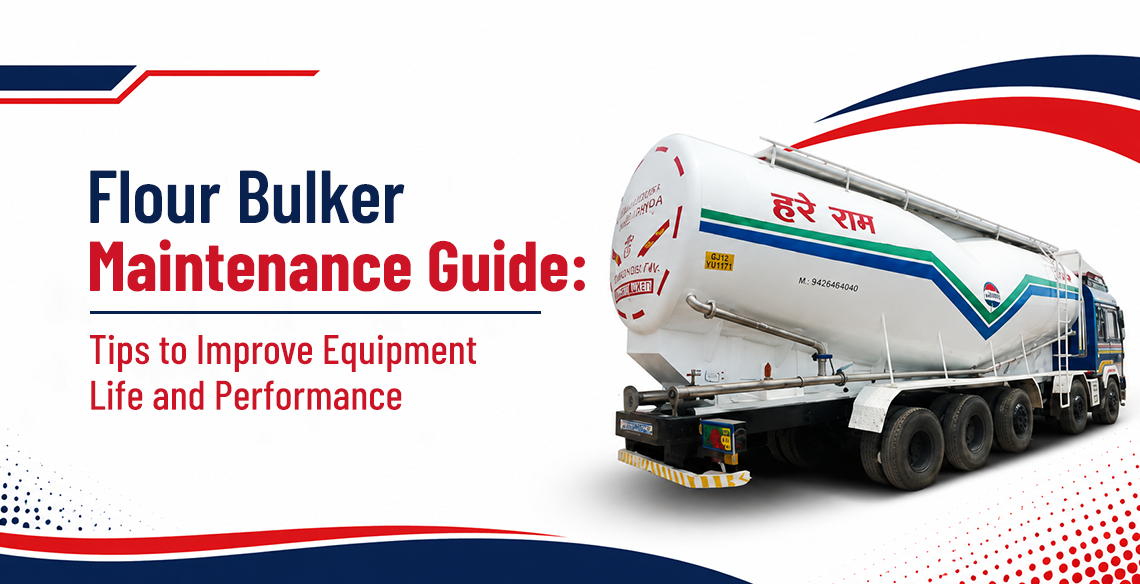
Flour Bulker Maintenance Guide: Tips to Improve Equipment Life and Performance
Introduction
A flour bulker is an important part of any flour transportation system. It helps transport large quantities of flour safely, quickly, and efficiently. However, like any industrial equipment, a flour bulker needs regular maintenance to work properly.
Without proper Flour Bulker Maintenance, small problems can become expensive repairs. Regular inspections and servicing can improve performance, reduce breakdowns, and increase the life of your equipment.
In this guide, you will learn simple maintenance tips, daily inspection methods, safety precautions, and a preventive maintenance schedule to keep your flour bulker in good condition.
-
Why is Flour Bulker Maintenance Important?
-
Daily Inspection Checklist
-
Air Compressor Maintenance
-
Valve and Pipeline Checks
-
Keep the Tank Clean
-
Follow Safety Precautions
-
Preventive Maintenance Schedule
-
Simple Ways to Extend Tanker Life
-
Common Signs Your Flour Bulker Needs Maintenance
-
Benefits of Regular Flour Bulker Maintenance
Why is Flour Bulker Maintenance Important?
Regular Flour Bulker Maintenance helps keep your tanker working safely and efficiently.
Proper maintenance can help you:
-
Reduce unexpected breakdowns
-
Improve unloading performance
-
Increase equipment life
-
Lower repair costs
-
Improve safety
-
Reduce downtime
-
Keep transportation running smoothly
Taking care of your equipment today can save time and money in the future.
Daily Inspection Checklist
A few minutes of inspection before every trip can help prevent major problems.
Here are some important things to check every day.
Check the Tank Body
Look around the tanker for:
-
Cracks
-
Dents
-
Rust
-
Damage to the outer body
If you notice any damage, repair it before using the tanker.
Check Tyres
Inspect the tyres for:
-
Proper air pressure
-
Cuts or damage
-
Uneven wear
Good tyres improve safety and fuel efficiency.
Check Air Leaks
Listen carefully for air leaks around the tanker.
Small leaks can reduce unloading performance and increase compressor work.
Repair leaks as soon as possible.
Check Connections
Make sure all pipes, hoses, and fittings are properly connected.
Loose connections can affect unloading and create safety risks.
Air Compressor Maintenance
The air compressor is one of the most important parts of the tanker.
Good Pneumatic Bulker Service always includes compressor maintenance.
Follow these simple tips:
-
Check the compressor before every trip.
-
Keep the compressor clean.
-
Check the oil level if required.
-
Listen for unusual sounds.
-
Replace worn parts on time.
-
Follow the manufacturer's service schedule.
A well-maintained compressor helps unload flour faster and reduces repair costs.
Valve and Pipeline Checks
Valves and pipelines control the movement of flour during unloading.
Regular inspection is an important part of Industrial Tanker Maintenance.
Check Valves
Make sure the valves:
-
Open properly
-
Close completely
-
Do not leak
-
Move smoothly
Damaged valves should be repaired or replaced.
Check Pipelines
Inspect all pipelines for:
-
Blockages
-
Cracks
-
Air leaks
-
Loose joints
Clean pipelines regularly to keep flour flowing smoothly.
Keep the Tank Clean
A clean tanker helps maintain flour quality.
After unloading, remove any remaining flour if needed.
Regular cleaning helps:
-
Prevent flour build-up
-
Reduce contamination
-
Improve hygiene
-
Maintain product quality
Cleaning is an important part of Flour Bulker Maintenance.
Follow Safety Precautions
Safety should always come first during maintenance.
Before starting any repair or inspection:
-
Park the tanker on level ground.
-
Switch off the engine.
-
Release air pressure before opening any pipeline.
-
Wear safety gloves.
-
Wear safety shoes.
-
Use protective eyewear when needed.
-
Follow the manufacturer's safety instructions.
These simple steps help prevent accidents and protect workers.
Preventive Maintenance Schedule
Instead of waiting for equipment to fail, follow a regular maintenance schedule.
Daily
-
Check the tank body
-
Inspect tyres
-
Check air leaks
-
Inspect valves
-
Check compressor
Weekly
-
Clean pipelines
-
Tighten loose bolts
-
Check hose connections
-
Inspect air pressure system
Monthly
-
Service the air compressor
-
Inspect the complete unloading system
-
Check pressure gauges
-
Lubricate moving parts where required
Every 6 to 12 Months
-
Complete equipment inspection
-
Replace worn parts
-
Test the pressure system
-
Inspect the tanker body
Following a schedule helps avoid unexpected issues and repairs.
Simple Ways to Extend Tanker Life
If you want your flour bulker to last longer, follow these simple tips.
Avoid Overloading
Never carry more material than the tanker's approved capacity.
Overloading puts extra pressure on the tanker and its components.
Drive Carefully
Avoid sudden braking and rough driving.
Safe driving reduces wear on tyres, suspension, and the tanker body.
Keep the Tank Dry
Moisture can damage the tanker and affect flour quality.
Always keep the inside of the tanker clean and dry.
Use Genuine Spare Parts
Always use quality replacement parts.
Cheap parts may fail quickly and increase repair costs.
Service on Time
Do not skip regular Pneumatic Bulker Service.
Regular servicing helps identify small problems before they become major repairs.
Common Signs Your Flour Bulker Needs Maintenance
Watch for these warning signs:
-
Slow unloading
-
Air pressure dropping
-
Air leaks
-
Unusual compressor noise
-
Flour leaking during unloading
-
Damaged valves
-
Blocked pipelines
-
Rust or cracks on the tanker
If you notice any of these problems, schedule maintenance immediately.
Benefits of Regular Flour Bulker Maintenance
Regular Flour Bulker Maintenance offers many advantages.
These include:
-
Longer equipment life
-
Better unloading performance
-
Lower repair costs
-
Improved fuel efficiency
-
Better safety
-
Less downtime
-
Higher productivity
-
Better return on investment
Good maintenance helps your business run more smoothly.
Conclusion
A flour bulker is a valuable investment, and regular maintenance is the best way to protect that investment. Proper Flour Bulker Maintenance improves equipment performance, reduces breakdowns, lowers repair costs, and increases the life of the tanker.
Simple daily inspections, regular Pneumatic Bulker Service, valve and pipeline checks, and following a preventive maintenance schedule can make a big difference in the long-term performance of your equipment.
By making Industrial Tanker Maintenance a regular part of your operations, you can improve safety, reduce downtime, and keep your flour transportation system running efficiently for many years.
Keep Your Flour Bulker Performing at Its Best
At Chamunda Industries, we manufacture high-quality flour bulkers designed for long-lasting performance and easy maintenance. We also provide expert guidance on Flour Bulker Maintenance, Pneumatic Bulker Service, and Industrial Tanker Maintenance to help our customers get the best performance from their equipment.
Whether you need a new flour bulker, spare parts, maintenance support, or expert advice, our experienced team is here to help.
Contact Chamunda Industries today to learn more about our reliable bulk transportation solutions and professional after-sales support.
Contact us: +91 9824430308
Email: [email protected]
Visit: https://flourbulker.com/