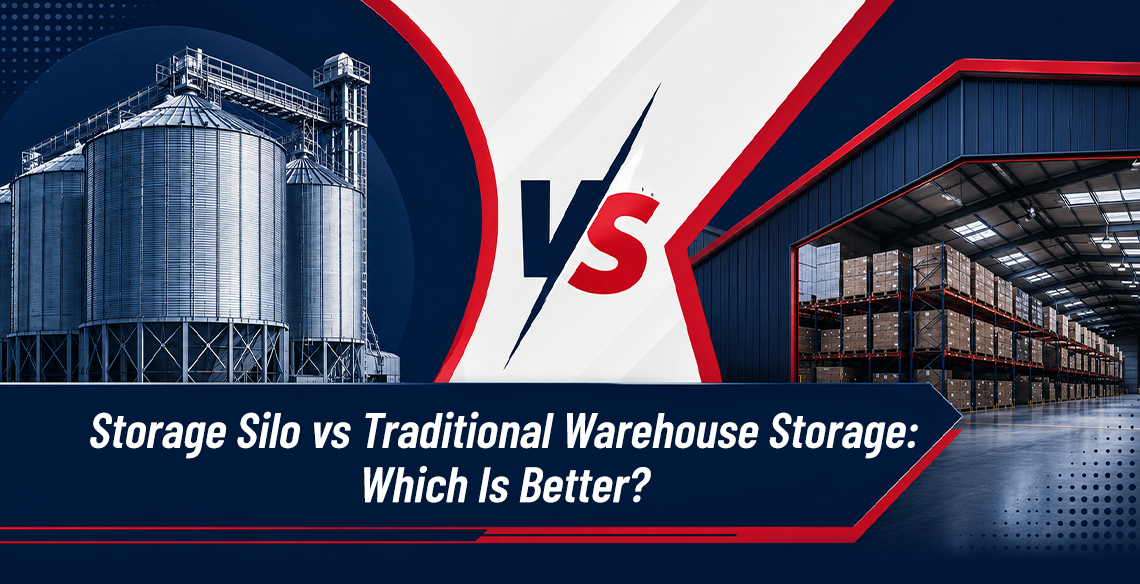
Storage Silo vs Traditional Warehouse Storage: Which Is Better?
Introduction
Every business needs a safe and efficient way to store its products. Whether you store flour, grains, cement, chemicals, or other bulk materials, choosing the right storage system is very important.
Many businesses still use traditional warehouses for storage. However, more industries are now choosing an Industrial Storage Silo because it offers better storage, saves space, and reduces operating costs.
But which option is better for your business?
In this blog, we will compare Industrial Storage Silos and traditional warehouse storage to help you make the right decision.
-
What is an Industrial Storage Silo?
-
What is Traditional Warehouse Storage?
-
Storage Efficiency
-
Product Protection
-
Space Utilization
-
Operational Costs
-
Long-Term Benefits of Storage Silos
-
Industry Comparison
-
When is a Warehouse a Better Choice?
-
When Should You Choose an Industrial Storage Silo?
-
How to Choose the Right Storage Silo Manufacturer
What is an Industrial Storage Silo?
An Industrial Storage Silo is a large storage container designed to store bulk materials safely.
It is commonly used to store:
-
Flour
-
Wheat
-
Rice
-
Cement
-
Fly ash
-
Animal feed
-
Sugar
-
Plastic granules
-
Other bulk materials
Unlike warehouse storage, where products are usually stored in bags, a silo stores materials in bulk. This helps improve storage efficiency and keeps the material safe.
A trusted Storage Silo Manufacturer designs silos according to the type of material and the storage needs of the business.
What is Traditional Warehouse Storage?
Traditional warehouse storage is the common method of storing products in bags, boxes, or containers inside a building.
Workers load, unload, and arrange the materials manually or with forklifts.
Warehouse storage is suitable for many products, but storing large quantities of bulk materials can become time-consuming and expensive.
Storage Efficiency
One of the biggest differences between a silo and a warehouse is storage efficiency.
An Industrial Storage Silo stores materials in bulk inside one closed structure. This allows businesses to store large quantities in a small area.
A warehouse stores materials in bags or stacks. As the number of bags increases, more space is needed.
Industrial Storage Silo
-
Stores bulk materials directly
-
Holds large quantities
-
Easy to fill and empty
-
Better stock management
Traditional Warehouse
-
Stores products in bags or boxes
-
Needs more handling
-
More time to load and unload
-
More storage space is required
For businesses that handle bulk materials every day, a silo is usually a more efficient choice.
Product Protection
Protecting stored materials is very important.
An Industrial Storage Silo is a closed storage system. It helps protect products from:
-
Rain
-
Dust
-
Moisture
-
Pests
-
Dirt
-
Outside contamination
For example, a Flour Storage Silo keeps flour clean and dry until it is needed for production.
In a traditional warehouse, products are usually stored in bags. If the bags are damaged or stored incorrectly, the material may be exposed to moisture, insects, or dust.
This can reduce product quality and increase waste.
Space Utilization
Many businesses have limited storage space.
An Industrial Storage Silo uses vertical space, which means it stores materials upwards instead of spreading across the floor.
This allows businesses to store more products in a smaller area.
A warehouse needs large floor space for:
-
Bag storage
-
Walking paths
-
Forklift movement
-
Loading and unloading
As production increases, businesses may need to expand the warehouse, which can increase costs.
Using silos helps businesses make better use of available land.
Operational Costs
Every business wants to reduce daily operating costs.
An Industrial Storage Silo can help lower costs because:
-
Less manual work is needed
-
Faster loading and unloading
-
Lower product loss
-
Less cleaning
-
Better inventory control
Warehouse storage often requires:
-
More workers
-
More packaging materials
-
More handling equipment
Although a silo may require a higher investment at the beginning, it can help reduce operating costs over time.
Long-Term Benefits of Storage Silos
Many businesses choose an Industrial Storage Silo because of its long-term advantages.
Some important benefits include:
-
Better storage efficiency
-
Longer product protection
-
Lower labor costs
-
Less product waste
-
Better space management
-
Easy inventory management
-
Long service life
These benefits help businesses improve productivity and reduce overall costs.
Industry Comparison
Different industries have different storage needs.
1. Flour Industry
A Flour Storage Silo is widely used because it keeps flour clean, dry, and ready for production.
2. Cement Industry
Silos help store cement safely and reduce moisture damage.
3. Food Processing Industry
Bulk ingredients can be stored safely while maintaining product quality.
4. Agriculture Industry
Farmers use silos to store grains and animal feed safely for long periods.
5. Chemical Industry
Specially designed silos are used to store powders and other bulk materials safely.
When is a Warehouse a Better Choice?
Traditional warehouse storage may still be a good option if:
-
You store many different small products.
-
Products are packed in cartons or boxes.
-
Storage quantities are low.
-
Bulk handling is not required.
Warehouses are useful for businesses that manage many product types instead of one bulk material.
When Should You Choose an Industrial Storage Silo?
An Industrial Storage Silo is a better choice if your business:
-
Stores large amounts of bulk materials
-
Wants to reduce labor costs
-
Needs faster loading and unloading
-
Wants better product protection
-
Has limited floor space
-
Plans to increase production in the future
Many modern factories are choosing silos because they improve storage efficiency and support business growth.
How to Choose the Right Storage Silo Manufacturer
Choosing the right Storage Silo Manufacturer is just as important as choosing the right storage system.
Before buying, check whether the manufacturer offers:
-
High-quality steel construction
-
Strong and durable design
-
Custom silo sizes
-
Easy maintenance
-
Quality testing
-
Installation support
-
After-sales service
-
Spare parts availability
An experienced Storage Silo Manufacturer will help you choose the right silo based on your material, storage capacity, and business requirements.
Conclusion
Both storage silos and traditional warehouses have their own advantages. The best choice depends on the type of material you store and the needs of your business.
If your business stores bulk materials such as flour, cement, grains, or powders, an Industrial Storage Silo offers better storage efficiency, improved product protection, better use of space, and lower operating costs. A Flour Storage Silo is especially useful for flour mills because it keeps flour clean, dry, and ready for production.
On the other hand, traditional warehouses are still useful for storing packaged products and different types of goods.
Before making a decision, carefully consider your storage capacity, available space, production volume, and future business plans. Working with an experienced Storage Silo Manufacturer will help you choose the right solution that supports your business for many years.
Looking for a Reliable Storage Silo Solution?
At Chamunda Industries, we design and manufacture high-quality Industrial Storage Silos for flour mills, food processing plants, cement industries, and many other businesses. Our silos are built for maximum storage efficiency, long service life, and safe bulk material handling.
Whether you need a Flour Storage Silo or a custom storage solution, our experienced team can help you choose the right silo based on your storage capacity and operational needs.
Contact Chamunda Industries today to discuss your project and get expert guidance from a trusted Storage Silo Manufacturer.
Contact us: +91 9824430308
Email: [email protected]
Visit: https://flourbulker.com/