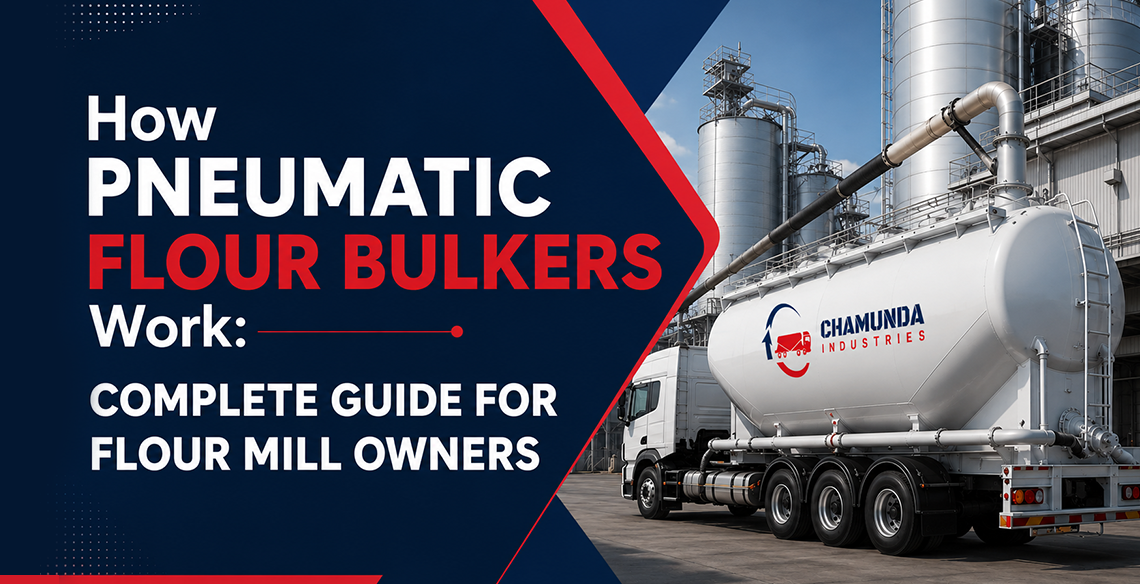
How Pneumatic Flour Bulkers Work: A Simple Guide for Flour Mill Owners
Introduction
Today, many flour mills need a faster and cleaner way to transport flour. Carrying flour in bags takes more time, needs more workers, and can cause flour to spill.
This is why many businesses now use a Pneumatic Flour Bulker. It carries flour in bulk and unloads it quickly using air pressure. This makes the work easier, cleaner, and faster.
In this guide, you will learn what a Pneumatic Flour Bulker is, how it works, how the air compressor helps, where it is used, how to maintain it, and the basic industry standards you should know.
-
What is a Pneumatic Flour Bulker?
-
Why Do Flour Mills Use a Pneumatic Flour Bulker?
-
Main Parts of a Pneumatic Flour Bulker
-
How Does a Pneumatic Flour Bulker Work?
-
How Does the Air Compressor Work?
-
How is Flour Unloaded?
-
Where is a Pneumatic Flour Bulker Used?
-
How to Maintain a Pneumatic Flour Bulker
-
Basic Industry Standards
-
Things to Check Before Buying a Flour Bulker Tanker
What is a Pneumatic Flour Bulker?
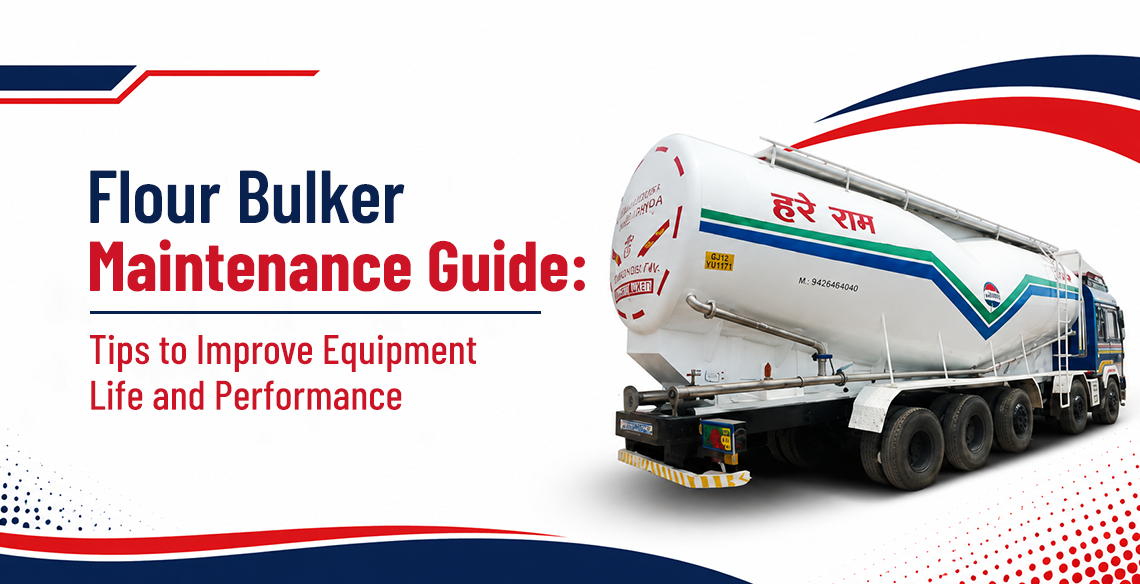
A Pneumatic Flour Bulker is a special vehicle that carries flour without using bags.
The flour is filled directly into a Flour Bulker Tanker at the flour mill. The tanker carries the flour safely to the customer.
When it reaches the delivery place, the flour is moved into a storage silo using air pressure. This complete process is called a Flour Transportation System.
Because the flour stays inside a closed tanker, it stays clean and safe during transport.
Why Do Flour Mills Use a Pneumatic Flour Bulker?
Many flour mills use a Pneumatic Flour Bulker because it makes work easier.
Some of the main benefits are:
-
Saves time
-
Needs fewer workers
-
Keeps flour clean
-
Reduces flour waste
-
Lowers packing costs
-
Makes unloading faster
-
Improves daily work
For flour mills that transport large amounts of flour every day, these benefits can save both time and money.
Main Parts of a Pneumatic Flour Bulker
A Flour Bulker Tanker has a few important parts. Each part has a special job.
Flour Tank
The tank stores the flour during transport.
It is made from food-grade material to keep the flour clean.
Air Compressor
The air compressor makes compressed air.
This air helps push the flour out of the tanker during unloading.
Pipes
The pipes carry the flour from the tanker to the storage silo.
Valves
The valves control the flow of flour and air.
Pressure Meter
The pressure meter shows the air pressure inside the system.
It helps the operator use the correct pressure.
How Does a Pneumatic Flour Bulker Work?
The working process is simple.
Step 1: Flour is Loaded
The flour is filled directly into the Flour Bulker Tanker.
The tanker is then closed to keep the flour safe from dust and moisture.
Step 2: Flour is Transported
The tanker carries the flour to the customer's factory or warehouse.
The flour stays inside the closed tank during the whole journey.
Step 3: Air Compressor Starts
After reaching the delivery point, the air compressor is switched on.
The compressor creates compressed air inside the tanker.
Step 4: Flour Moves Through Pipes
The compressed air pushes the flour through pipes.
The flour moves directly into the customer's storage silo.
No bags are needed.
No workers need to carry heavy bags.
Step 5: Unloading is Finished
When all the flour has been unloaded, the operator disconnects the pipes.
The tanker is then ready for cleaning or the next delivery.
This simple Flour Transportation System helps save time and keeps the flour clean.
How Does the Air Compressor Work?
The air compressor is one of the most important parts of a Pneumatic Flour Bulker.
Its job is very simple.
It takes normal air and compresses it.
This compressed air creates pressure inside the tanker.
The pressure pushes the flour through the pipes and into the storage silo.
Without the air compressor, the flour cannot move out of the tanker.
How is Flour Unloaded?
The unloading process is quick and easy.
Here are the steps:
-
Park the Flour Bulker Tanker near the storage silo.
-
Connect the unloading pipe.
-
Start the air compressor.
-
Air pressure pushes the flour through the pipe.
-
Stop the compressor after unloading is complete.
This process is much faster than unloading thousands of flour bags by hand.
Where is a Pneumatic Flour Bulker Used?
A Pneumatic Flour Bulker is used in many places where large amounts of flour are needed.
Some common users are:
-
Flour mills
-
Roller flour mills
-
Wheat processing plants
-
Bakery factories
-
Biscuit factories
-
Noodle factories
-
Pasta factories
-
Food processing companies
These businesses use a Flour Transportation System because it is faster and more efficient.
How to Maintain a Pneumatic Flour Bulker
Regular maintenance helps the tanker work properly and last longer.
Here are some simple maintenance tips.
1. Check the Air Compressor
Make sure the air compressor is working well before every trip.
2. Check the Pipes
Look for leaks or damage in the pipes.
3. Clean the Tank
Clean the inside of the tanker regularly to keep it hygienic.
4. Check the Valves
Make sure all valves are opening and closing properly.
5. Check the Air Pressure
Always use the correct air pressure.
Too much or too little pressure can reduce performance.
6. Service the Tanker
Regular servicing helps avoid breakdowns and keeps the Flour Bulker Tanker working smoothly.
Basic Industry Standards
A good Pneumatic Flour Bulker should follow basic quality and safety standards.
These include:
-
Food-grade tanker material
-
Strong tanker body
-
Leak-proof design
-
Safe air pressure system
-
Easy cleaning
-
Good-quality air compressor
-
Proper quality testing before delivery
Following these standards helps transport flour safely and keeps the flour clean.
Things to Check Before Buying a Flour Bulker Tanker
Before buying a Flour Bulker Tanker, check these important points.
-
Is the tanker made from food-grade material?
-
Does it have a good air compressor?
-
Is it easy to clean?
-
Is it easy to maintain?
-
Does it meet industry safety standards?
Choosing the right tanker can help your business save money and work more efficiently.
Conclusion
A Pneumatic Flour Bulker is a simple and smart solution for transporting flour. It helps flour mills move large amounts of flour quickly, safely, and with less waste.
A good Flour Bulker Tanker uses compressed air to unload flour through pipes, making the Flour Transportation System fast and clean. It also reduces manual work, saves time, and improves hygiene.
By understanding how a pneumatic flour bulker works, following basic maintenance, and choosing a tanker that meets industry standards, flour mill owners can improve their daily operations and reduce transportation costs.
As more flour mills move towards modern bulk transport, Pneumatic Flour Bulkers are becoming an important part of efficient and reliable flour handling. This makes them a smart investment for businesses that want better productivity and long-term savings.
If you are looking for a top Pneumatic Flour Bulker provides high-quality and reliable performance. Get a free consultation.
Contact us: +91 9824430308
Email: [email protected]
Visit: https://flourbulker.com/